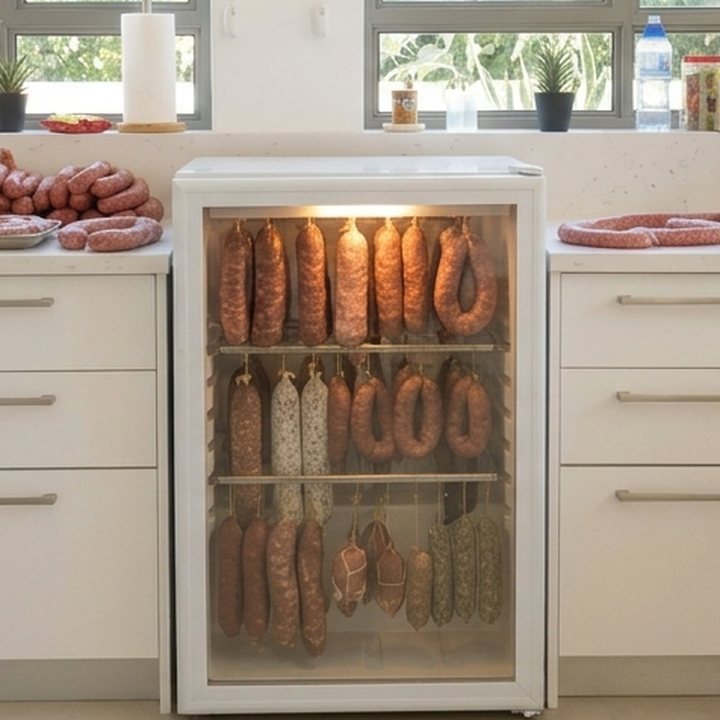
 Long drying · about 3 months
Spicy Calabrese salami
Pork, back fat and chili. A week of fermentation, then aging to the recipe's weight-loss target.
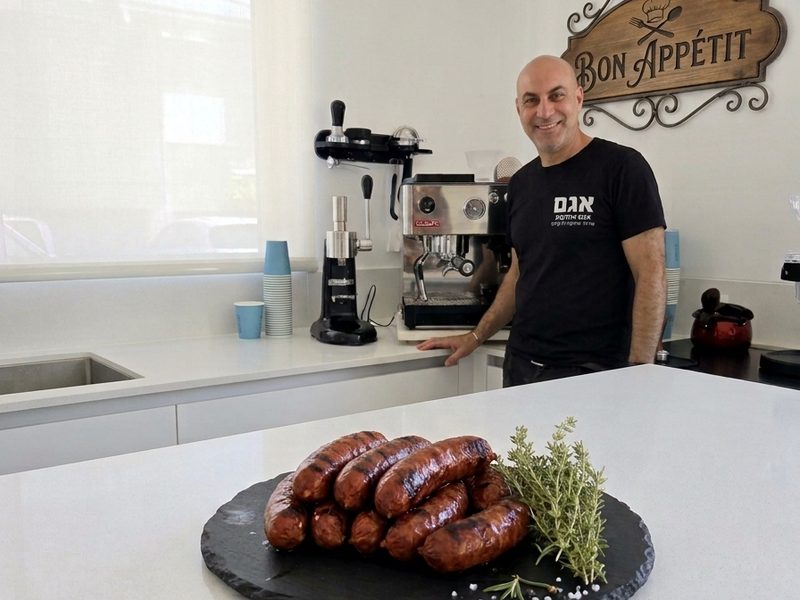
Shlomi Hagami's Charcuterie
Handmade sausages, aged cuts and fresh sausages. From the fridge to the slicer, every step is weighed, measured and documented.

Three families, each with its own pace and conditions.
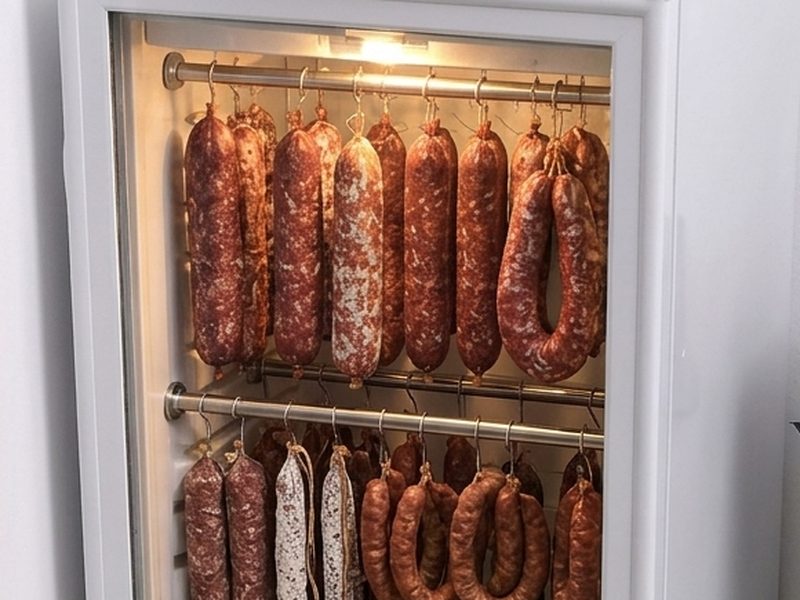
Milano and Calabrese salami, soppressata, Spanish chorizo, pepperoni, fuet and sujuk. Fermentation, weeks to months of aging, and weight-loss tracking.
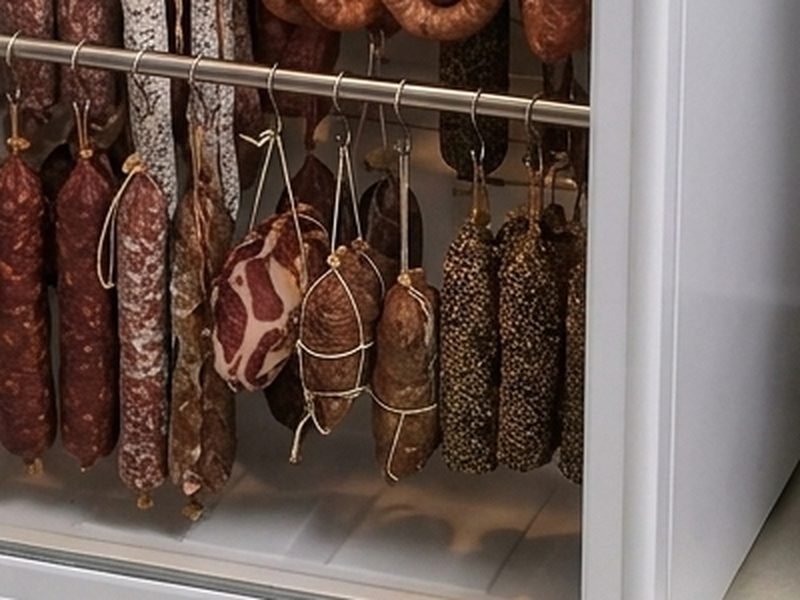
Lonza, pancetta and bresaola. Salting in the fridge, spices and slow drying of a whole cut.
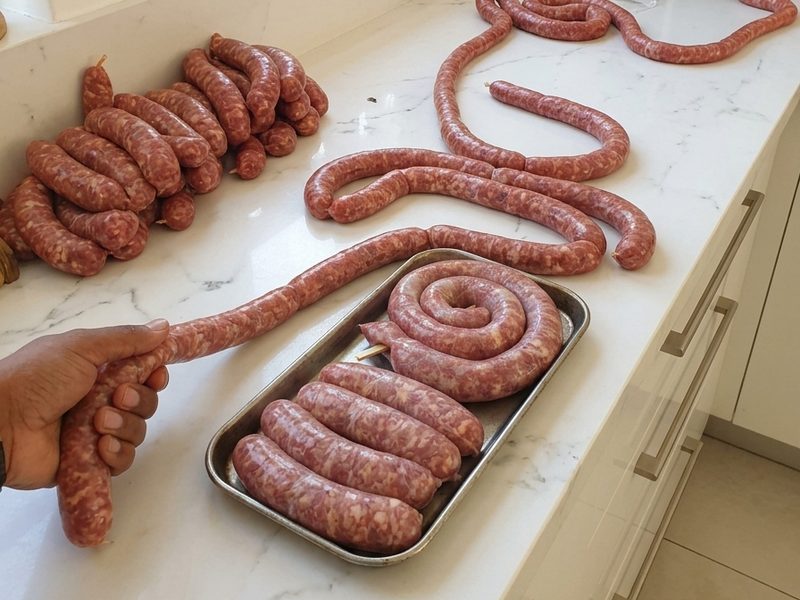
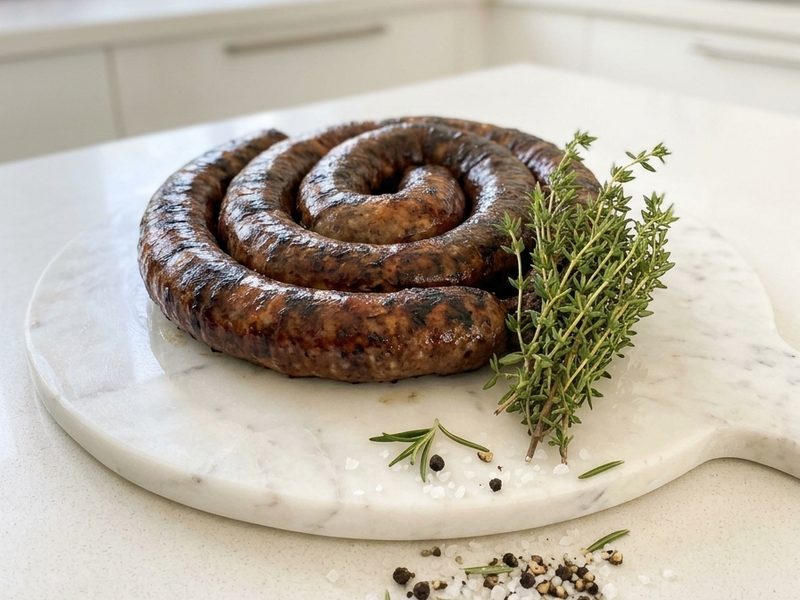
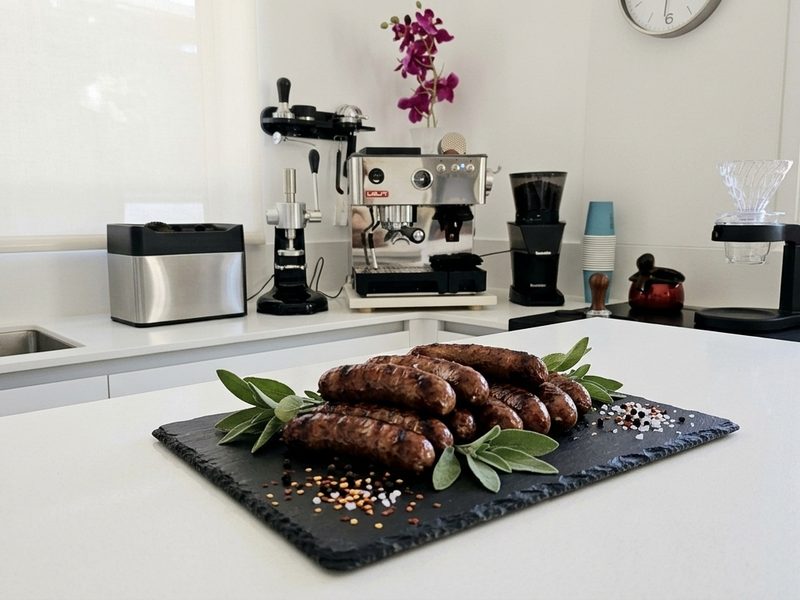
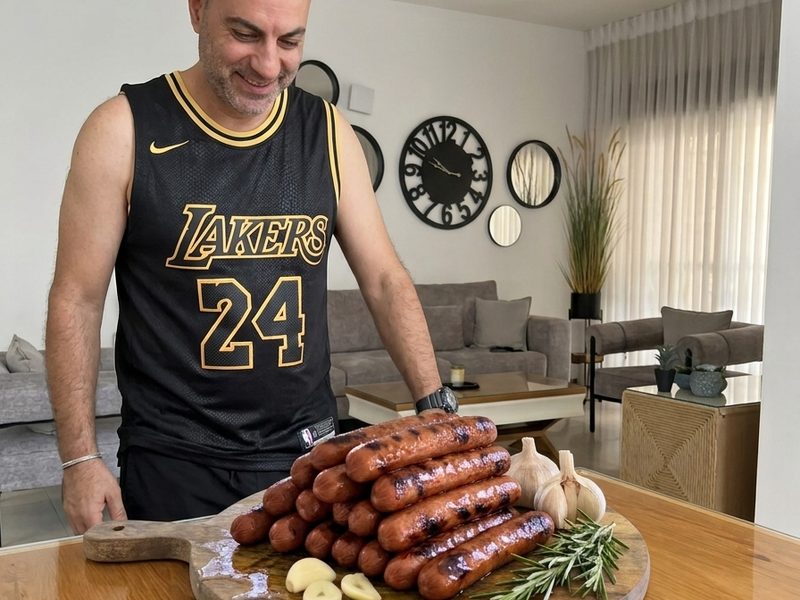
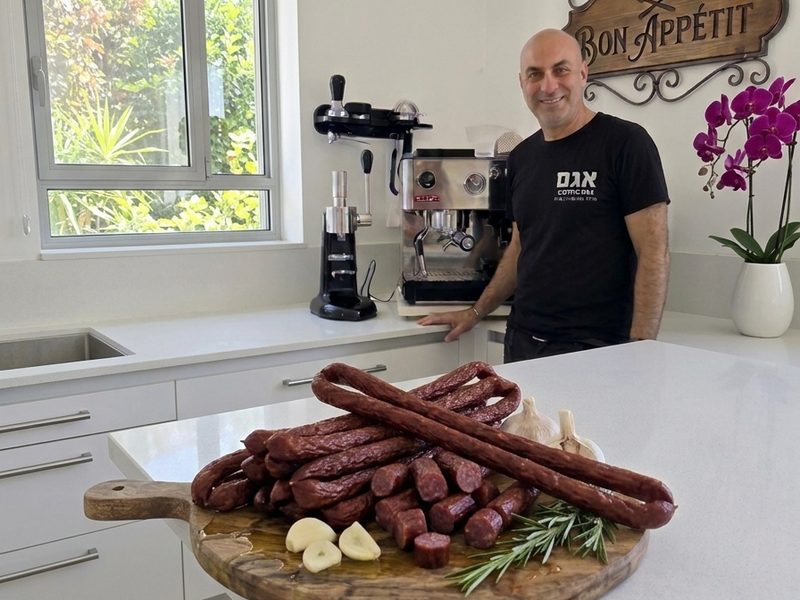

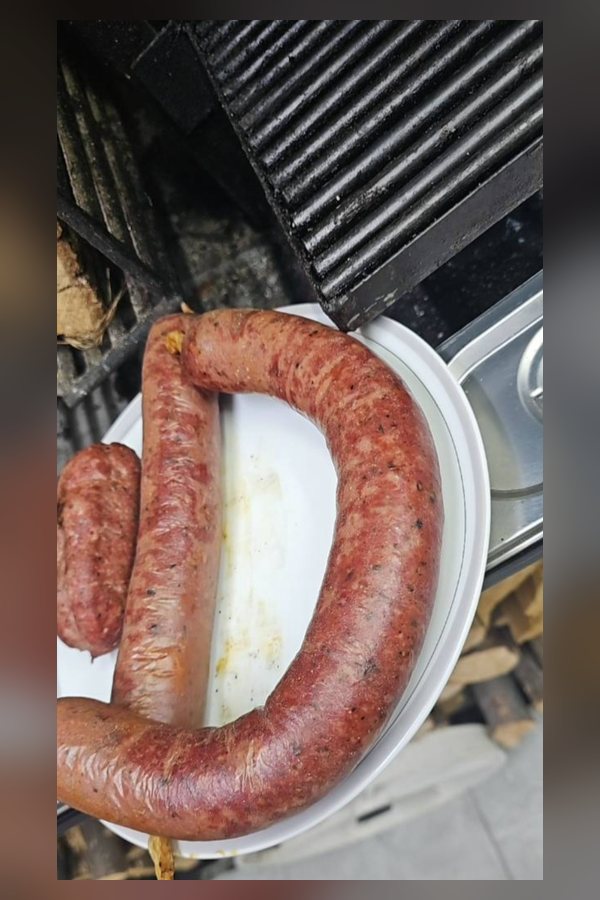
Merguez, bratwurst, boerewors, hot Italian sausage, plus smoked and cooked kabanos and frankfurters. Fill, rest overnight and grill.
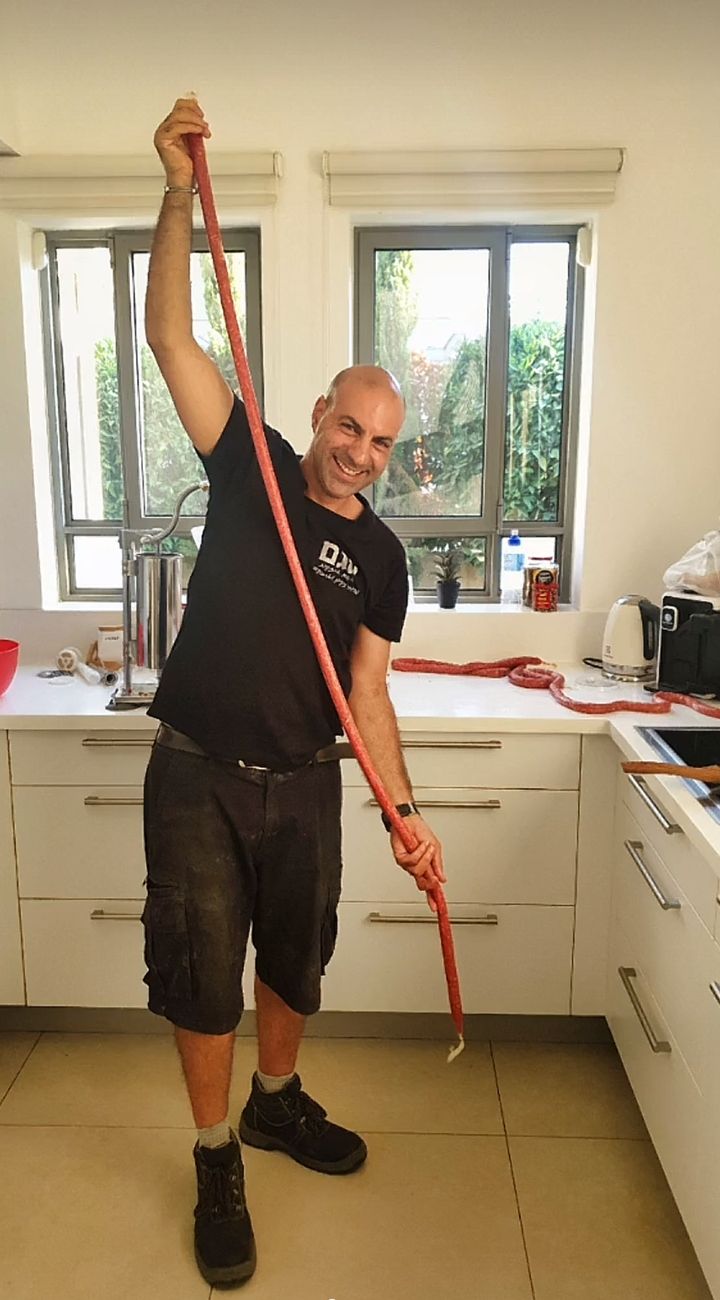
It all starts with cold meat, exact weights and hands that know the process. Then come the chilling, fermentation and aging, and at every stage we check: weight, temperature, humidity and appearance.
I document all of it in the app, so for every cut or sausage I know what worked and what to change next time. At the end, a week of equalizing in the package, and then we slice.
Six stages, from the first weighing to the slice. At every stage you know what to do, under what conditions, and when to weigh again.
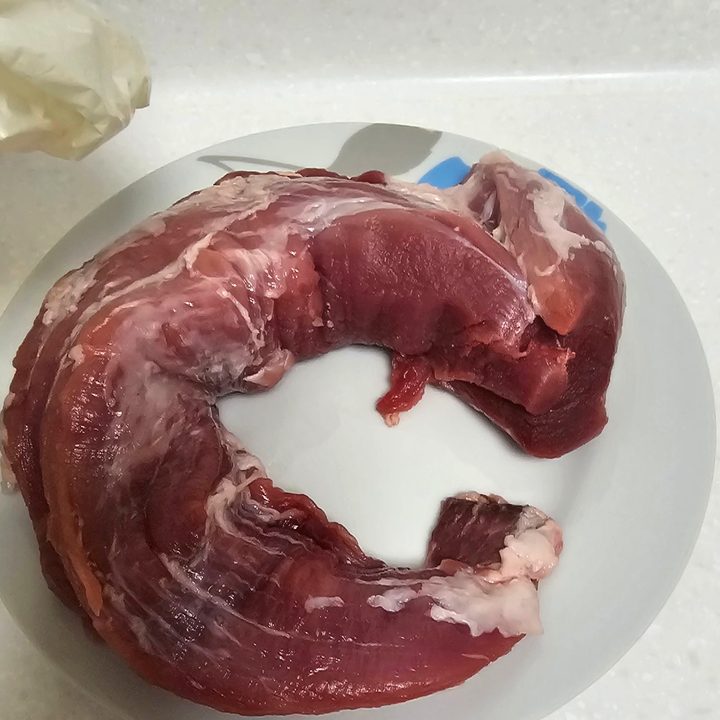
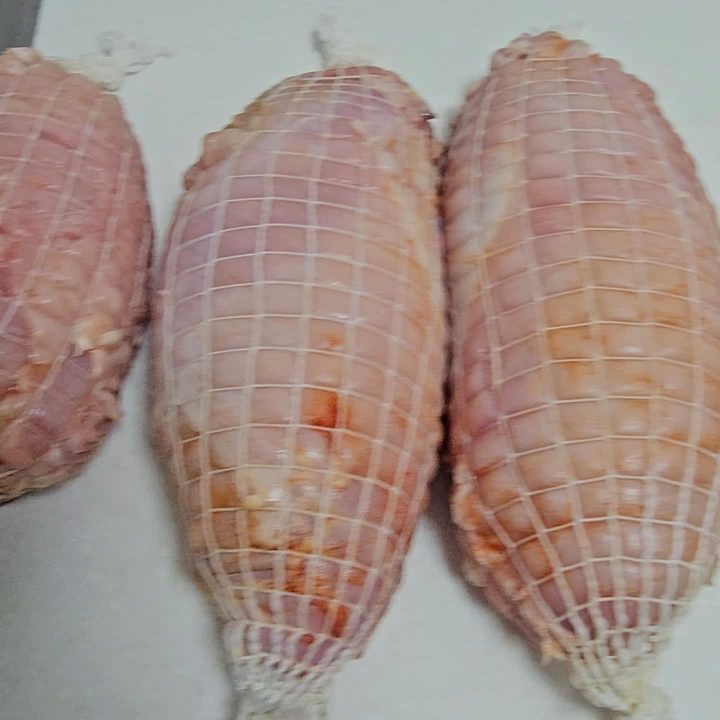
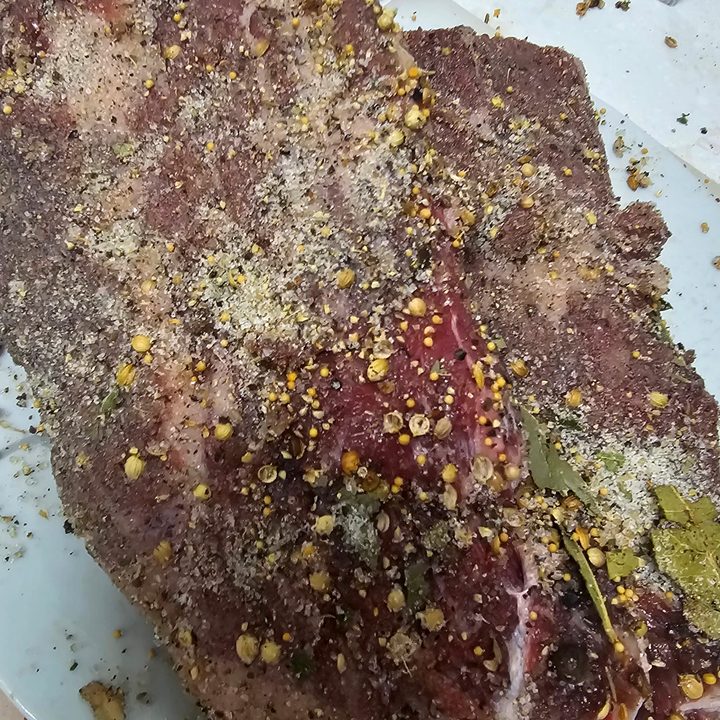
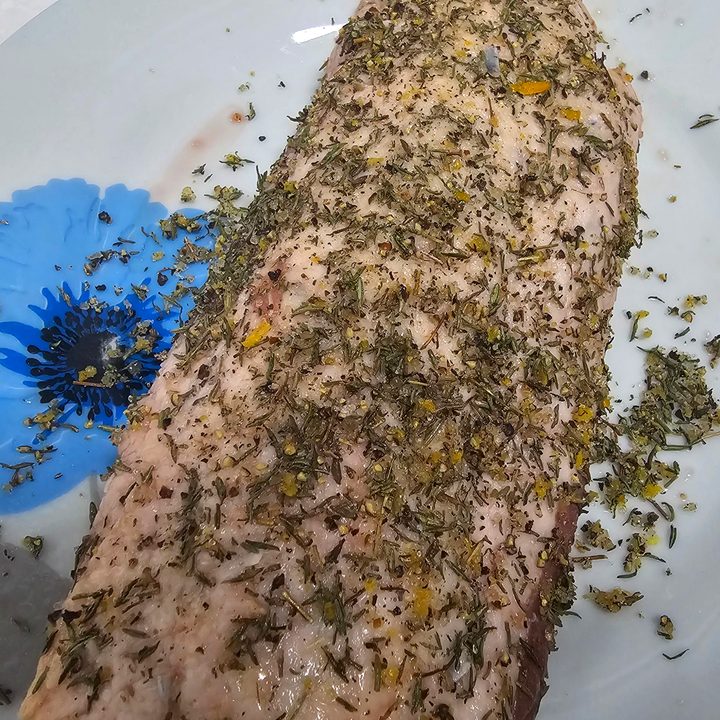
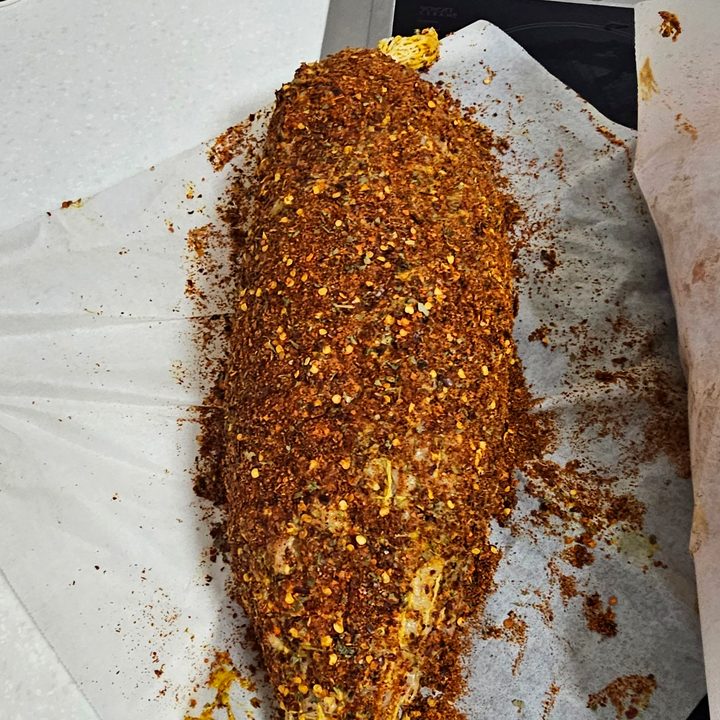
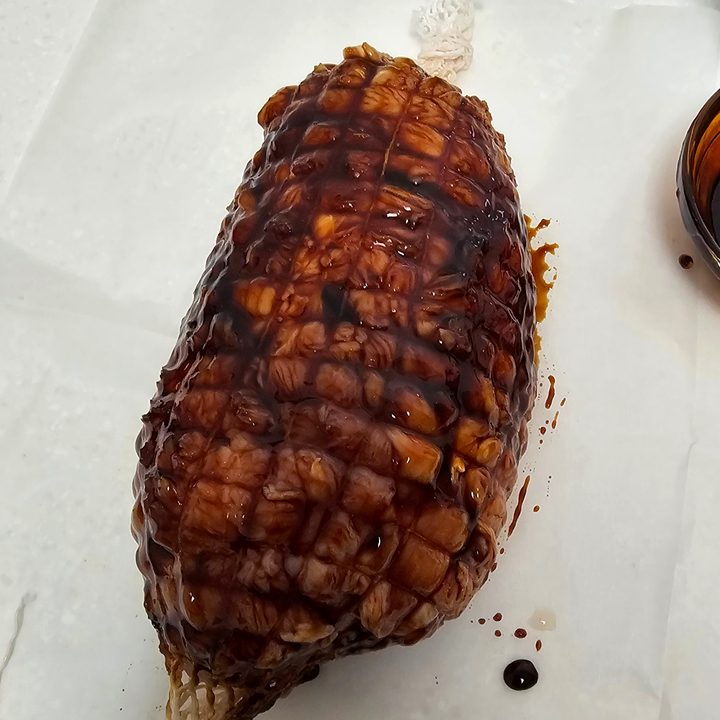
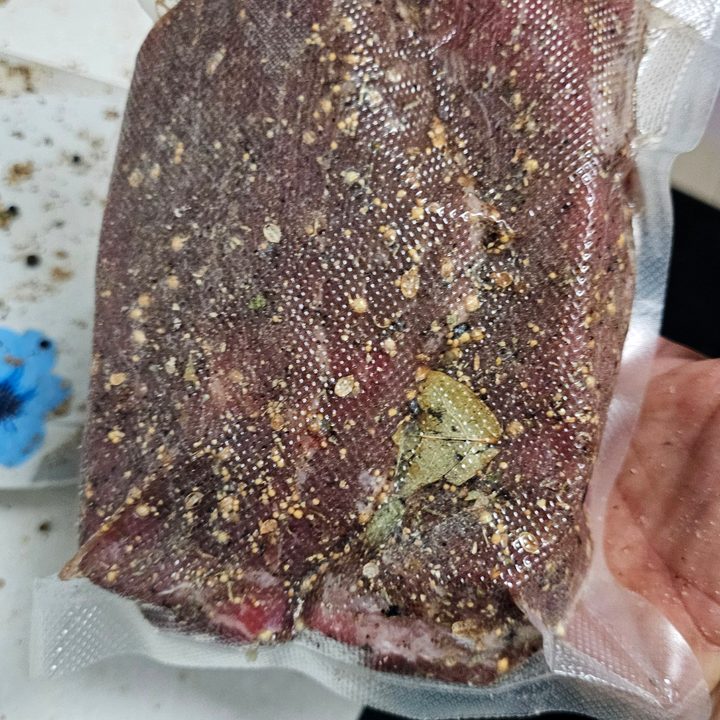
Weigh everything exactly, grind very cold meat and fat, and mix with the spices. The curing salt is weighed on a precise scale.
The sausage rests in the cold so the salt and spices spread through it. There are extra stages as needed: brining, smoking and more.
For fermented sausage, about 20 to 24°C and high humidity. At the end we measure pH, and below 5.3 we can continue.
Hang at constant cooling, about 12 to 16°C and 70 to 80 percent humidity. Weigh every few days until the recipe's weight-loss target: usually 30 to 40 percent for sausage and whole cuts, and almost half the weight for biltong.
Finally, about a week of rest in a sealed package in the fridge, so the moisture inside the cut evens out.
Slice thin with a sharp knife or a slicer, and keep the finished sausage refrigerated.
Live data from my app. Updates automatically on every visit.
A small taste from the library. The full quantities, preparation steps and the quantity calculator are in the app.
Weigh the salt and curing salt on a precise scale and never exceed the amount in the recipe. Too much curing salt is dangerous, and too little does not protect.
Long drying · about 3 monthsPork, back fat and chili. A week of fermentation, then aging to the recipe's weight-loss target.
Dry-cured cut · 4 weeks or moreBeef eye of round, curing salt and warm spices. Ready at 30 percent loss or more.
 No drying
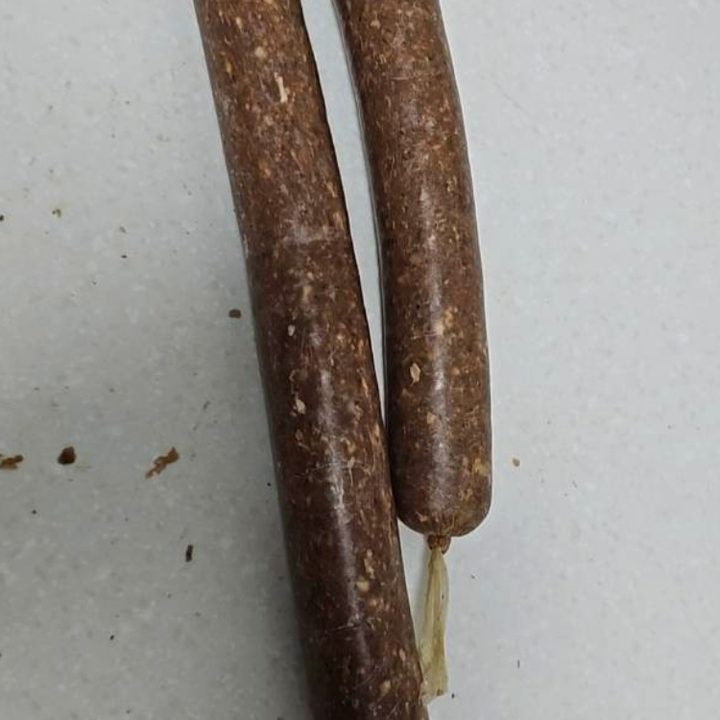
Beef and lamb fat, garlic, cumin, shatta and paprika. Stuffed in collagen casing, rested overnight and grilled.
 No drying
Pork and veal with a delicate seasoning of white pepper and nutmeg. A fresh sausage for grilling.
Everything you need to dry sausages at home and know exactly where every cut stands.
Every weigh-in is logged, and the chart shows the pace against the target, including a planned line based on the recipe.
Reminders for weighing, moving to the next stage and fridge maintenance, even when the app is closed, with snooze.
Temperature and humidity by stage, with an alert when out of range and a suggestion of what to do.
A quantity calculator, a safety check for salt and curing salt, and creating a piece in the fridge straight from the recipe.
Steps to tick off, checks and timers, with the screen staying on while your hands are messy.
Photos and videos, before and after, and full documentation of every step of the sausage's journey.
A few short answers for beginners.
It depends on thickness and type. A thin sausage is ready within weeks to a month, and a thick salami takes a few months. We measure by weight loss, not by the calendar.
The sausage loses water during drying, measured as a percentage of its starting weight. The target depends on the product: usually 30 to 40 percent for salami and dried sausages, about 30 to 35 percent for a whole cut like bresaola or lonza, and almost 50 percent for biltong. For example, a salami that starts at 1,000 g with a 35 percent target is ready at around 650 g.
For long drying, Prague powder #2 is essential for safety. Weigh it on a precise scale, at about 0.25 percent of the meat weight. For smoked and cooked sausages, use Prague powder #1.
Usually about 12 to 16°C and 70 to 80 percent humidity. Fermentation needs about 20 to 24°C and 85 to 90 percent humidity. The app shows the target for each stage and compares it with your measurement.
White, even, powdery mold is usually desirable on dried sausages. Green, black, orange or slimy mold is a warning sign, and when in doubt, don't eat it.
Click "Open the app" to take a look in view mode. To manage your own pieces, click "Sign up free", register with an email and confirm the email that is sent.
The app is open to everyone. Sign up with an email, get 22 ready-made recipes, and start tracking your first piece. You can install it on your phone's home screen. The first 14 days are free.